Classic Board Games Ranked by Real People — Roll the Dice on the Definitive List
By SendMeYourList Team | Entertainment
Every family has a game shelf. Every game shelf has a hierarchy. Some games get pulled out at every gathering. Some games live at the back, still in shrink wrap, purchased with good intentions that never materialized into an actual game night. The rankings on that shelf — the games that get played versus the ones that collect dust — reveal something true about who you are as a family, a friend group, and a person.
We made it official. Real people voted on SendMeYourList.com to rank the greatest classic board games of all time. No algorithms, no paid placements, no influence from Milton Bradley's marketing department. Just pure community consensus on which games deserve the top shelf and which belong in the closet.
Head to the live Board Games ranking page and drag them into your own definitive order. Your family will disagree. That's tradition.
1. Monopoly — The Game That Ends Friendships and Starts Arguments
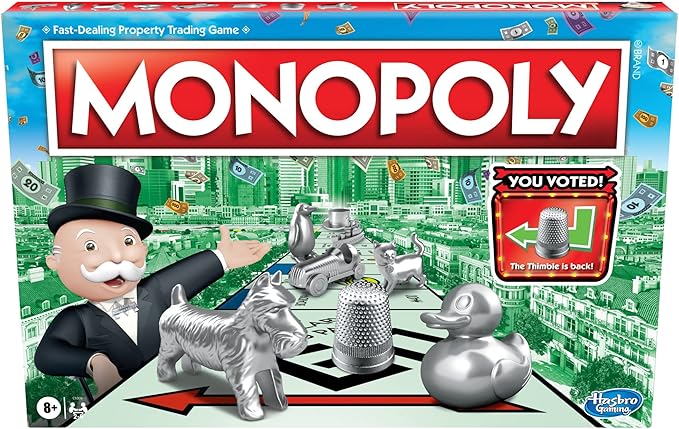
No board game generates more strong opinions than Monopoly. It's too long. It's broken. The banker always cheats. Someone flips the board. Someone else has been hoarding hotels on Boardwalk for the past four hours and the game is functionally over but nobody wants to admit it. And yet — Monopoly sits at #1 in the community ranking because despite every complaint, nearly every household has played it, and nearly every game night has a Monopoly story.
First published in 1935, Monopoly has sold over 275 million copies worldwide in more than 100 countries. It exists in versions themed around virtually every city, sports team, TV show, and cultural property imaginable. It is the most successful board game in history by almost every metric. The community recognized what everyone secretly knows: the arguments ARE the game. Monopoly at its best is social theater with a real estate backdrop.
If you enjoy ranking things that generate strong opinions and heated family debates, check out our Top Candy ranking — another list where nostalgia and strong opinions collide.
2. Scrabble — The Word Game That Turns Everyone Into a Linguist
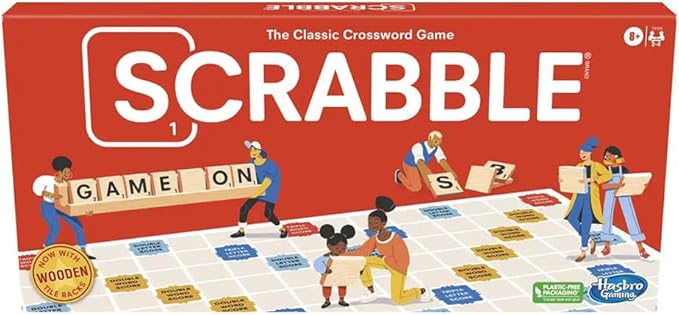
Scrabble is where board game players go to feel intelligent and end up in a dispute about whether "qi" is a real word. (It is. It's worth 11 points on a standard square. Yes, the person who plays it has been waiting the entire game for a Q without a U. Yes, it is legal. Yes, you should have learned this by now.)
Alfred Mosher Butts invented Scrabble in 1938, spent years trying to sell it to major game companies who all passed, and then watched it become one of the best-selling games in history after Macy's placed a large order in 1952. Over 150 million sets have been sold worldwide. It's played competitively at national and international levels. It spawned a generation of people who can spell words they absolutely cannot define. Second place in the community ranking is entirely earned — Scrabble is the board game that makes you feel like you're doing something useful while having fun.
3. Clue — Every Game Night Is a Murder Mystery
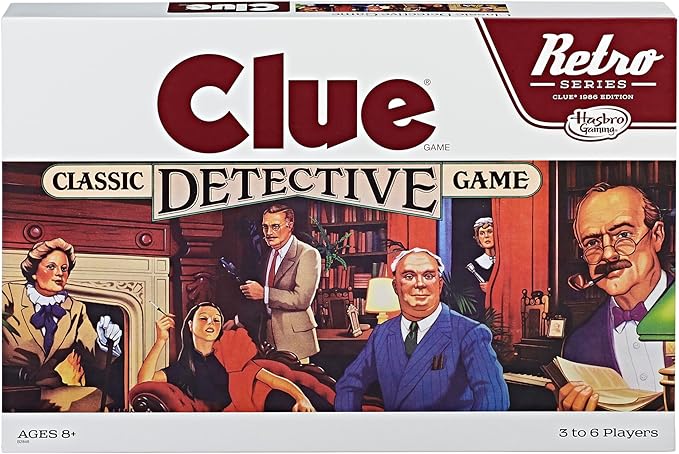
It was Colonel Mustard. In the library. With the candlestick. Or was it? Clue (Cluedo in the UK, where it originated in 1943) is the board game that turned every living room into a crime scene and every player into an amateur detective. The deduction mechanic — ruling out suspects, weapons, and rooms through process of elimination — holds up as one of the most satisfying puzzle structures in game design.
What makes Clue endure is the theater of it. You're not just tracking information — you're watching people's faces when they show you a card, trying to read what they know, calculating who knows what based on what questions have been asked. It's a social deduction game before social deduction games were a recognized genre. Third place for one of the most beloved mystery games ever made is well deserved.
Fans of deduction and strategy might also enjoy our Mystery ranking page — another place where figuring things out is the whole point.
4. Risk — The Global Domination Game That Takes All Weekend
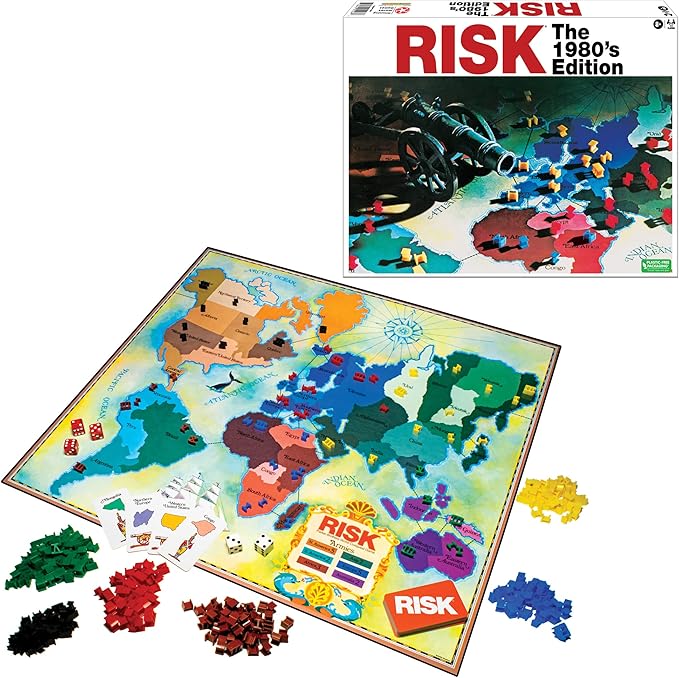
Risk is the game you play when you want to conquer the world and have six to eight hours to spare. The global map, the territory cards, the dice battles, the alliance-making and alliance-breaking — Risk is Monopoly's more geopolitically ambitious cousin, a game where you can spend an hour building an impenetrable position in Australia and watch it crumble in twenty minutes when someone decides you've become too powerful.
Created in 1957 by French filmmaker Albert Lamorisse and published by Hasbro, Risk has taught generations of players the fundamentals of strategic thinking: concentrate your forces, protect your borders, choose your battles, and never trust the person who says they're just trying to survive. The friends-to-enemies pipeline in Risk runs about four rounds. Fourth place in the ranking is a strong showing for a game that typically ends with at least one diplomatic incident.
5. Battleship — Two-Player Strategy at Its Purest
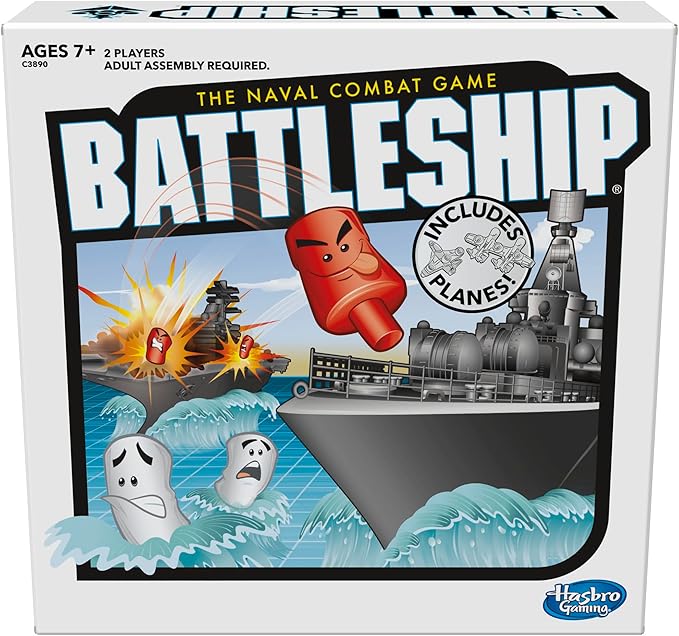
"B-4." "Miss." "F-7." "Hit." The back-and-forth of Battleship is one of the most satisfying two-player game structures ever designed. You're working with incomplete information, building a probability map in your head, trying to pattern the hits into a direction that reveals the rest of the ship. It sounds simple because it is — and it works completely because of that simplicity.
Battleship's origins trace back to a pencil-and-paper game played during World War I. Milton Bradley published the plastic peg-and-grid version in 1967, and the iconic "You sunk my battleship!" became one of the most recognizable phrases in game history. Fifth place for a game that delivers its exact promise every single time is a respectable landing spot.
6. Connect 4 — Simple, Deep, and Endlessly Satisfying
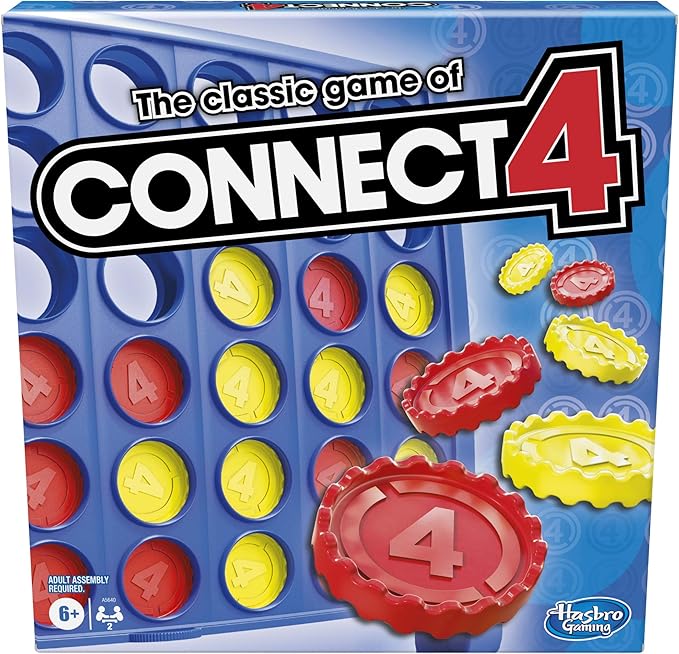
Connect 4 is mathematically a solved game — the first player always wins with perfect play. This fact has ruined precisely zero games of Connect 4 because nobody plays it with perfect play. People play it at kitchen tables, at picnics, in hospital waiting rooms, and they lose to seven-year-olds because the seven-year-olds are faster at seeing the diagonal threats. Connect 4 is proof that a simple concept executed perfectly is worth a thousand complicated mechanics.
Four in a row. Six rows. Seven columns. Gravity determines where the pieces go. The elegance of the constraint — you can't just place anywhere, you have to stack — is what makes it. Sixth place in the community ranking for one of the cleanest two-player games ever made.
7. The Game of Life — Spinning the Wheel of Adulthood
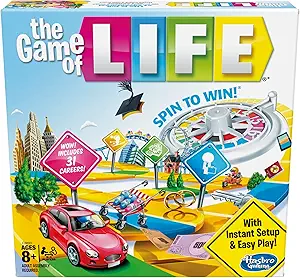
The Game of Life has been teaching children the basics of adult financial anxiety since 1860 — making it the oldest game on this list and one of the oldest commercially sold board games in American history. You choose a career. You spin the wheel. You have children (sometimes more than you planned). You take out loans. You retire to Millionaire Estates or Countryside Acres depending on how the wheel treated you across forty-five minutes of simulated existence.
What Life captures better than most games is the randomness of outcomes. You can make all the right choices and still land on the wrong squares. You can make questionable choices and spin your way to a comfortable retirement. That's not a design flaw. That's the point. Seventh place for a game that's been making people contemplate their financial futures since the Civil War era.
8. Sorry! — The Sweetest Revenge in Family Gaming
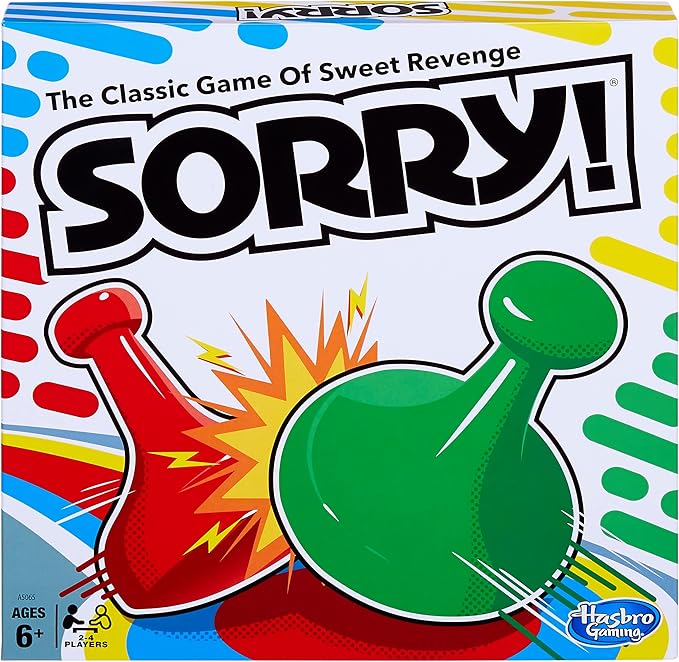
The entire game of Sorry! is built around one mechanic: drawing the Sorry card and sending someone's pawn back to Start with an apology that is purely theatrical and not remotely sincere. "Sorry!" you say, sliding their piece off the board with obvious satisfaction. Nobody has ever meant it. The beauty of the game is that it makes you feel fine about this — the rules say you say sorry, the rules don't say you have to mean it.
Published by Parker Brothers in 1934, Sorry! remains one of the most-played family games in American households because it operates at exactly the right level of complexity for mixed-age game nights. Young enough for kids, fast enough for adults, enough genuine strategy to keep it interesting. Eighth place is a solid showing for a game that has been generating insincere apologies for nearly a century.
9. Operation — The Nerve Test That Never Gets Easier
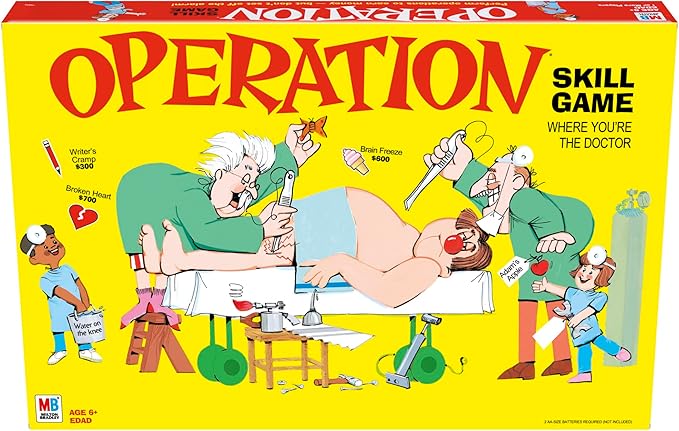
Operation is pure physical comedy as a board game — remove the Funny Bone without touching the metal edges, or the red nose lights up and the buzzer goes off and everyone laughs at you. The named ailments (Writer's Cramp, Adam's Apple, Spare Ribs, Charley Horse) are the kind of pun-based naming convention that works exactly once and then gets burned into your memory forever. Every child who has played Operation remembers the exact buzzer sound. Every adult who has played it recently discovers their hands still shake.
Milton Bradley released Operation in 1965, and the design has barely changed because it doesn't need to. The tension is in the simplicity: steady hands, small tweezers, absurdly named body parts. Ninth place for a game that is functionally a dexterity test disguised as a family activity.
10. Yahtzee — Five Dice and a Dream
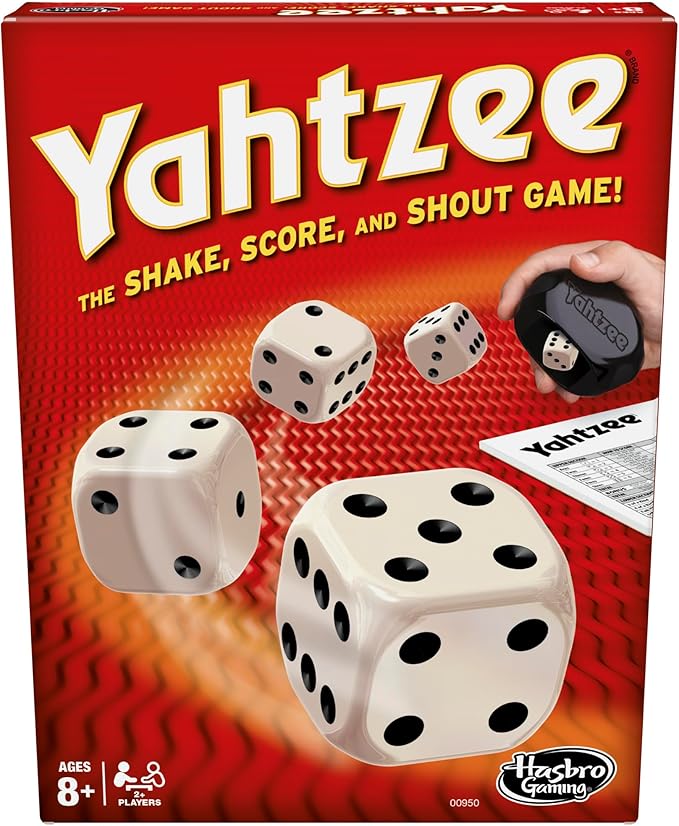
"YAHTZEE!" — shouted when all five dice show the same number — is one of the great spontaneous moments of family game night. The scoring categories (three of a kind, four of a kind, full house, small straight, large straight, Yahtzee itself) create a satisfying optimization puzzle across thirteen rounds. You're never just rolling dice — you're deciding which categories to fill, which to sacrifice, which to gamble on filling later.
E.S. Lowe commercialized Yahtzee in 1956 after purchasing the rights from a Canadian couple who played it on their yacht. Over 50 million sets have been sold worldwide. It remains one of the few dice games that rewards genuine strategic thinking — you can make the same roll mean different things depending on what categories you've already filled. Tenth place for a game that makes five dice feel like a complete universe.
11. Uno — The Card Game That Qualifies as a Board Game Moment
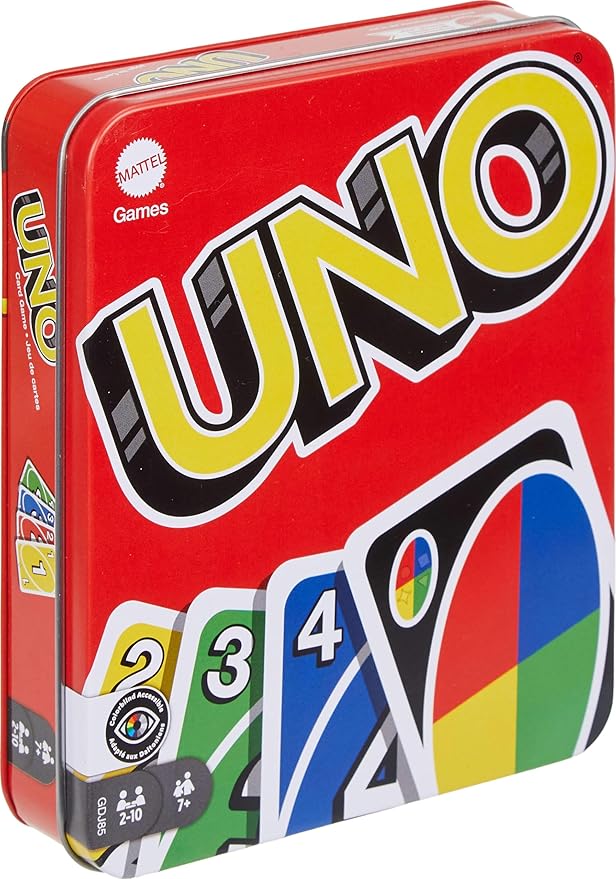
Technically a card game, but Uno lives on the board game shelf in every household that owns it, and it generates the same kind of escalating chaos that defines the best board game nights. Draw four. Skip. Reverse. Wild. "Uno!" called one card before the win, then immediately challenged because the person next to you is watching. The Draw Four stacking debate has ended more game nights than any other rule dispute in modern gaming history.
Created in 1971 by Merle Robbins in Reading, Ohio, Uno has sold over 150 million copies and is played in over 80 countries. It works because the rules are simple enough to learn in two minutes and complex enough through card interaction to generate genuine strategy. And because Draw Four is absolutely devastating and everyone knows it. Eleventh place for a card game that belongs on any list of great family gaming experiences.
12. Candy Land — The Gateway to Every Game That Follows
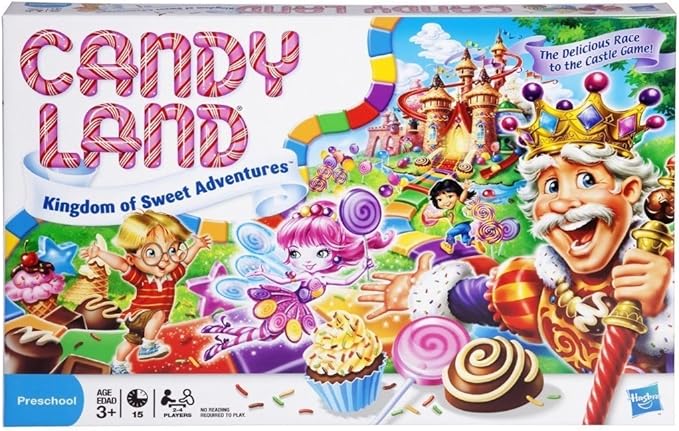
Candy Land ranks twelfth not because it's a lesser game but because it's a different kind of game — the game that introduces children to the concept of board games, to taking turns, to following a path, to the basic experience of playing something together. Eleanor Abbott designed it in 1948 while recovering from polio in San Diego, creating it specifically for children in the polio ward who were too young for complex games. That origin story alone earns it a place on any ranked list.
Every adult who plays board games today started somewhere. For many of them, that somewhere was a colorful path through a kingdom made of candy, moving a gingerbread pawn toward King Kandy's castle. Twelfth place on this list means it's the beginning — and beginnings matter most.
For more games and activities that defined childhood, check out our Video Games ranking and our Arcade Games ranking — two more lists where nostalgia and genuine quality rankings collide.
What This Ranking Tells Us
The top of this list — Monopoly, Scrabble, Clue — represents the games that became cultural institutions. They're not just games; they're shared references, common experiences, the things people mean when they say "family game night." The middle tier — Risk, Battleship, Connect 4, Life, Sorry! — are the specialists, the games that each do one thing brilliantly and deliver that thing reliably across every playing. The bottom tier — Operation, Yahtzee, Uno, Candy Land — are the games that fill specific niches: the nerve test, the dice game, the quick-play card hybrid, the kid entry point.
Together they represent a complete gaming ecosystem that has entertained families for generations. The community picked well. The game shelf agrees.
What's on Your Game Shelf?
Think Risk deserves the top spot? Convinced Clue is the greatest deduction game ever made and should be #1? Believe Yahtzee is criminally underranked? Ready to defend Operation with your life?
Head to the Board Games ranking page on SendMeYourList, drag every game into your definitive order, and share it with your game night crew. Let the debates begin. Game on.