Plastic Army Men Ranked by Real Fans — Which Soldier Wins the Sandbox War?
By SendMeYourList Team | Entertainment
If you grew up in the second half of the 20th century, there's a good chance you staged at least one epic battle across your bedroom floor, backyard, or sandbox using a bag of green plastic army men. They cost next to nothing and delivered infinite possibility. A hundred soldiers, a dozen poses, and an entire afternoon.
The poses were everything. Not all army men were created equal. Some dominated the battlefield. Some ended up in the back of the bag, deployed only when you needed numbers. Real fans voted on SendMeYourList.com to determine definitively which plastic soldier poses deserved the front lines — and the results are exactly as heated as any actual military debate.
Head to the live Army Men ranking page to drag the soldiers into your own battle formation. Deploy your favorites. Retire the ones that spent every battle at the back.
1. Bazooka — The Most Powerful Soldier on the Field
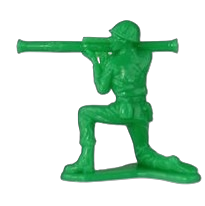
The bazooka soldier takes the top spot and it isn't close. He's carrying the biggest weapon in the standard army men set, he has a distinctive silhouette that reads clearly from across the room, and every kid who ever played with these soldiers understood instinctively that the bazooka man needed to be protected and deployed at the right moment. The bazooka man was not cannon fodder. The bazooka man was an asset.
The classic bazooka pose — soldier kneeling, launcher on shoulder, ready to fire — is one of the most satisfying sculpts in the entire army men lineup. Functional, purposeful, instantly recognizable. You knew exactly what this soldier was for the moment you pulled him out of the bag. First place in the community ranking is the only correct outcome. The bazooka man has earned it through decades of decisive sandbox action.
2. Flamethrower — The Most Intimidating Presence in Any Battle
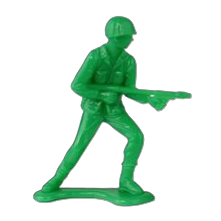
The flamethrower soldier is the army man whose appearance changes the psychology of a battle. He doesn't need to fire — the presence of the flamethrower in your formation communicates something to the opposition. This is a battle fought with extreme measures. There are consequences here. The backpack tank, the hose, the bracing stance — the sculpt communicates weight and purpose in a way that most soldier poses don't.
Second place for the flamethrower is a nod to his reputation: the soldier who looks dangerous before he does anything. In a childhood battlefield, reputation matters. The flamethrower man commanded respect and earned his place at the front of every serious formation.
3. Mortar — The Long-Range Artillery Specialist
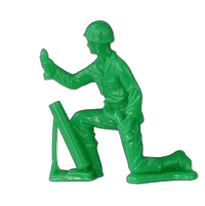
The mortar crew brought artillery to the plastic battlefield and changed the strategic calculus completely. Set him up at the back of the formation, angled toward the enemy, and now you have indirect fire capability. The mortar soldier could sit behind your defensive line and theoretically hit anything across the room. In the battlefield logic of childhood, this was a game-changer — you didn't have to expose your main force to get firepower downrange.
Third place for the mortar reflects his role as the reliable heavy support piece that every serious army needed but not everyone deployed correctly. The kids who understood what the mortar was for won more battles. The kids who didn't kept complaining the bazooka man wasn't enough.
4. Follow Me — The Officer Who Led from the Front
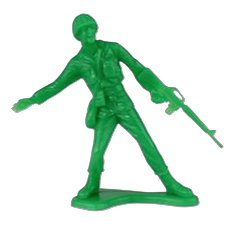
The "Follow Me" officer — arm extended forward, pistol in hand, charging into battle — is the most dynamic pose in the army men lineup. This soldier is in motion. Every other figure is static: standing, kneeling, prone, aiming. The Follow Me officer is actively moving, which made him the natural battlefield commander in childhood formations. He went where the fighting was worst. He led the charge. He was the first one into the enemy position and often the first casualty, which felt narratively correct.
Fourth place for the officer reflects his unique position: too exposed to be the most tactically valuable, but too iconic to rank any lower. Every battle needed a Follow Me soldier at the front. Without him, it was just a formation. With him, it was an assault.
5. Radio Man — The Most Tactically Important Soldier Nobody Appreciated
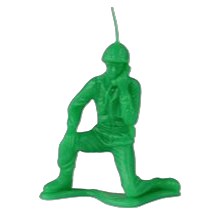
The radio operator is the army man who made everything else work — calling in support, coordinating between units, maintaining communication across the battlefield. He carries his radio pack on his back and the antenna up, which made him visually distinctive in any formation. The kids who understood what a radio operator did placed him near command and kept him protected. The kids who didn't know what he did stuck him at the back and wondered why their army felt disorganized.
Fifth place for the radio man reflects a quiet appreciation among fans for the support roles. You don't win battles on firepower alone. Communication matters. The radio man knew this. He's always known this. He just never got the credit.
If you enjoy ranking the unsung heroes and specialists, check out how fans ranked the cast of Seinfeld — another place where the supporting players regularly outperform expectations.
6. Minesweeper — The Bravest Soldier in the Formation
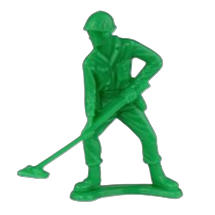
The minesweeper advances slowly, detector extended, checking every inch of ground before the main force moves forward. This is not a glamorous role. There are no medals celebrated for mine detection work in childhood battlefield logic — but there is the understanding that somebody has to go first, somebody has to check what's ahead, and that somebody is the minesweeper. He's the bravest soldier in the bag by definition of his job description.
Sixth place for the minesweeper is a measure of respect from a community that understands what he represents: the person who does the dangerous, unglamorous necessary work before the glory soldiers arrive. Every formation needed him. Not everyone appreciated him enough to rank him higher.
7. Bipod Machine Gunner — Maximum Suppressive Fire
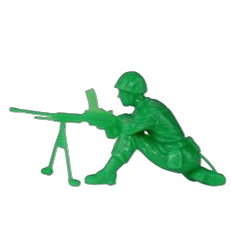
The bipod machine gunner is deployed prone, gun resting on its two-legged support, laying down suppressive fire to cover the advance of every other soldier in the formation. He occupies ground. He controls space. He doesn't move — he doesn't need to move. His job is to make the ground in front of him dangerous enough that the enemy has to think twice before crossing it.
Seventh place for the bipod gunner reflects his tactical value: essential in a defensive formation, less useful in the forward assault role that most childhood battles favored. The kids who played defensively ranked him higher. The kids who preferred charging ranked him lower. Both approaches had their merits.
8. Prone Rifleman — The Patient Sniper
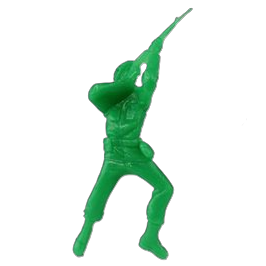
The prone rifleman has the lowest profile of any soldier in the set — he's flat on the ground, rifle extended, presenting the smallest possible target to the enemy. In tactical terms, this is sound doctrine. In childhood battle terms, it made him slightly harder to knock over than the standing soldiers, which counted as an advantage. He was also the first choice for placement behind small rocks, pencils, and whatever other battlefield terrain you'd assembled.
Eighth place for the prone soldier reflects his quiet effectiveness. He's not exciting. He doesn't have a bazooka or a flamethrower. He's just there, flat on the ground, patient, accurate, reliable. The sort of soldier every army needs and nobody writes songs about.
9. Low Crawl — Moving Under Fire
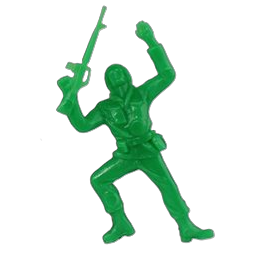
The low crawl soldier is in motion — advancing under fire, hugging the ground, getting from one position to another while staying below the danger zone. Unlike the prone rifleman who is set and stationary, the low crawl suggests movement, infiltration, the advance that happens when standing up isn't an option. He's the soldier who gets into position while everyone else is distracted by the bazooka man.
Ninth place for the low crawl soldier reflects the challenge of ranking a figure whose value is in what he represents rather than what he can do in the static tableau of a bedroom battlefield. He's moving. He's always been moving. The ranking just caught him mid-crawl.
10. Kneeling Rifleman — The Versatile Middle Ground
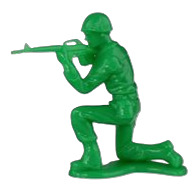
The kneeling rifleman occupies the middle tactical ground between standing and prone — lower profile than the standing shooter, more mobile-looking than the prone position, stable enough to be accurate. He's the soldier you had the most of because he was the most common pose in any bag of army men. Versatile, deployable anywhere, useful in any formation. If the bazooka man is the specialist, the kneeling rifleman is the backbone.
Tenth place is a little low for the soldier who made up the majority of every formation, but that's the fate of the backbone: necessary, abundant, slightly underappreciated. Every battle was won by these soldiers. The bazooka man got the credit.
11. Captain — The Command Presence
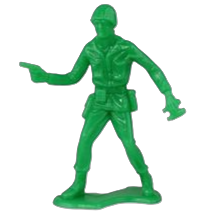
The captain figure — officer's posture, pistol drawn or pointed — represents command authority in the formation. In battlefield logic, the captain stays back, surveys, directs. In childhood battlefield logic, the captain sometimes got placed at the absolute front and immediately eliminated because the kid who owned him wanted to see what happened. The captain understood. Command is a lonely calling.
Eleventh place for the captain reflects the complex relationship between rank and effectiveness in plastic army doctrine. High status, moderate battlefield utility. The bazooka man outranks him in practical terms. The captain would not accept this assessment without a strongly worded memo.
12. Bayonet Charge — Close Combat and Pure Aggression
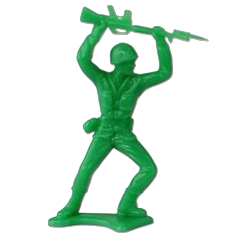
The bayonet soldier is at full sprint, rifle extended, blade forward, committed to close-quarters combat. He has run out of ammunition or run out of options, and now he is going in. This is not a defensive posture. This is the end game, the moment when the battle has reached the point where distance weapons don't matter anymore and it comes down to whoever wants it more.
Twelfth place for the bayonet soldier reflects his niche role — spectacular in the right moment, limited in versatility. But every great battle memory from childhood has a bayonet soldier in the climactic scene. He was always the one closing the distance at the end. That's worth something. That's worth remembering.
For more childhood nostalgia and toy rankings, check out our Video Games ranking and Board Games ranking — two more lists where childhood memories drive very strong adult opinions.
What This Ranking Tells Us
The community ranked firepower over everything else: the top three slots belong to the bazooka, the flamethrower, and the mortar — heavy weapons specialists who controlled the battlefield. The middle tier belongs to the support roles and specialists: the officer, the radio man, the minesweeper, the machine gunner. The bottom tier belongs to the riflemen and close-combat soldiers — the backbone of every formation, the most common figures in every bag, the least flashy and most essential.
It's a ranking that reflects something true about how childhood battles were fought: firepower was the headline, but the quiet soldiers in the middle won the battles. The bazooka man gets the spotlight. The kneeling rifleman holds the line.
Deploy Your Own Formation
Think the flamethrower deserves the top spot? Convinced the radio man is criminally underranked? Ready to argue that the bayonet charge should be #1 on pure aggression points alone?
Head to the Army Men ranking page on SendMeYourList and drag every soldier into your definitive battle order. Share it. Start a tactical debate. That's what the sandbox was always for.